The Mughal Empire is the most labor-intensive of all Cultural Settlements – for almost every diplomacy quest you have to demolish a large part of your city and rebuild it. It unlocks with the Late Medieval research "Higher Education". It is the first settlement that only becomes available in the Late Middle Ages and suits players looking for a real layout puzzle.
Overview
| Feature | Mughal Empire |
|---|---|
| Roads | Required – buildings must be connected |
| Currency | Rupees (start: 5,000) |
| Playthroughs | 10 unique rewards, then endless (60 FP/playthrough) |
| Quests | 20 |
| Time challenge | Minaret (2×2, 4 levels) |
| Special mechanic | Diplomacy chains + set bonuses – the core puzzle |
The chain mechanic is the biggest difference to other settlements: Alleys and Water Canals can dock at specific points on the Embassy and stack as a bonus. The three large diplomacy buildings (Chhatri, Baldachin, Charbagh) additionally grant a daily set bonus when all three different types are placed next to the Embassy.
Buildings & Production
Residential buildings (Rupees + population)
| Building | Size | Population | Rupee production |
|---|---|---|---|
| Bhavan | 2×2 | 16 | 66 / 5h |
| Shanti Ghar | 3×3 | 59 | 272 / 10h |
| Haveli | 4×3 | 113 | 744 / 20h |
Residential buildings provide population and Rupees – they need a road connection to produce. Like with the Vikings, the bottleneck is noticeable until the first active diplomacy building; here it takes a bit longer than in other settlements.
Goods buildings
| Building | Size | Produces |
|---|---|---|
| Rice Paddy | 4×3 | Basmati |
| Saree Weaver | 3×3 | Sarees |
| Spice Trader | 4×3 | Spices |
| Lotus Flowers Farm | 3×5 | Lotus |
All goods buildings have identical production values – only the good differs:
| Production | 5 | 10 | 20 |
|---|---|---|---|
| Cost (Rupees) | 1,000 | 2,000 | 4,000 |
| Duration | 5h | 10h | 20h |
Diplomacy buildings
The smaller buildings (Alley, Water Canal) provide diplomacy only and form chains. The three large ones combine diplomacy and Rupee production on 5-minute to 20-hour cycles:
| Building | Size | Diplomacy | 5 min | 15 min | 1h | 5h | 10h | 20h | Mechanic |
|---|---|---|---|---|---|---|---|---|---|
| Chhatri | 2×2 | 16 | 10 | 23 | 68 | 182 | 272 | 544 | Set (next to Embassy) |
| Alley | 3×2 | 24 | – | – | – | – | – | – | Chain (vertical, front/back) |
| Water Canal | 2×3 | 24 | – | – | – | – | – | – | Chain (horizontal, sides) |
| Baldachin | 3×3 | 63 | 25 | 60 | 178 | 475 | 712 | 1,423 | Set (next to Embassy) |
| Charbagh | 5×3 | 150 | 55 | 131 | 393 | 1,046 | 1,569 | 3,138 | Set (next to Embassy) |
From the 10h cycle onwards, Rupee production per hour drops significantly – in practice: prefer the 1h cycle, otherwise use 5h.
Rupees per hour comparison:
| Building | 1h cycle | Space | Rupees/Area |
|---|---|---|---|
| Bhavan | 13.2/h | 2×2 | 3.3 |
| Chhatri | 68/h | 2×2 | 17 |
| Baldachin | 178/h | 3×3 | 19.8 |
| Charbagh | 393/h | 5×3 | 26.2 |
Chain & Set Mechanics
Chain Bonuses
Alleys and Water Canals dock at specific points on the Embassy and stack:
| Building | Connection | Bonuses (by chain length) |
|---|---|---|
| Alley | vertical, front/back | +5 / +10 / +15 / +20 / +25 |
| Water Canal | horizontal, sides | +10 / +20 / +30 |
Set Bonus (all 3 large buildings next to Embassy)
When Chhatri, Baldachin and Charbagh are all three different types placed next to the Embassy:
| Set | Bonus |
|---|---|
| Set 1 | +5 cultural goods / day |
| Set 2 | +10 cultural goods / day |
| Set 3 | +25 cultural goods / day |
The set bonus is paid out automatically when harvesting the Embassy. Only with different buildings – three Chhatri give only one bonus, not three.
Expansions
| Sector | Basmati | Sarees | Spices | Lotus | Diamonds |
|---|---|---|---|---|---|
| 1 | 5 | 5 | 5 | 5 | 350 |
| 2 | 15 | 5 | 5 | 5 | 500 |
| 3 | 30 | 15 | 5 | 5 | 500 |
| 4 | 50 | 30 | 5 | 5 | 500 |
| 5 | 60 | 50 | 15 | 5 | 500 |
Tip: Always use the good with the lowest quantity in the row for expansions – production time stays the same, you just need fewer units.
Optimal flow
Phase 1: Start
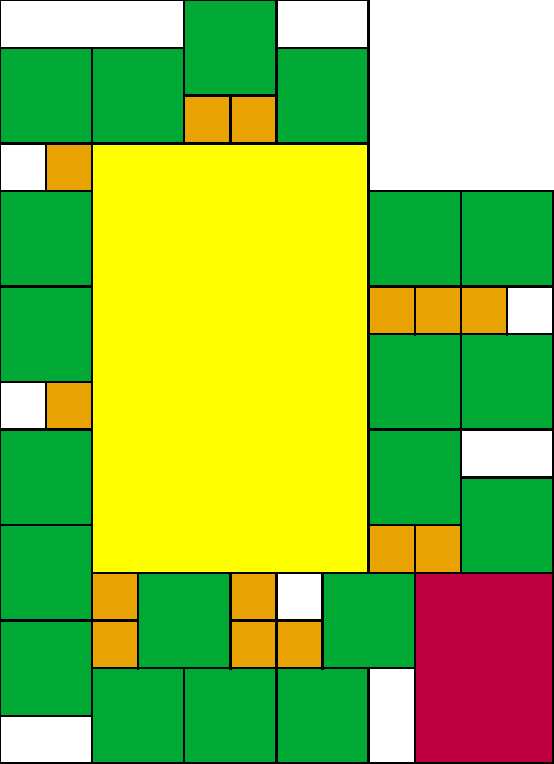
- Build 6 Bhavan + 3 Alleys at the Embassy steps + 1 Rice Paddy → the first 3 quests are done right away
- Demolish the Alleys immediately → final state: 20 Bhavan + 1 Rice Paddy + 14 roads (as shown in the image)
- Start 5h production during the day, 10h production overnight
Phase 2: First unlocks & production
- Produce Basmati, harvest Rupees regularly from the Bhavan
- Buy an expansion with the first harvest (on the side or front of the Embassy – prepare the chain layout)
- Briefly place Alleys for the next diplomacy quest → quest done → demolish
- Unlock Water Canal (chain bonus horizontal)
- Unlock Saree Weaver → 2nd goods building, Sarees are the cheapest expansions
Phase 3: Mid phase
- Unlock Spice Trader + Lotus Flowers Farm → 4 goods buildings in parallel
- Replace Bhavan with Shanti Ghar / Haveli (saves space)
- Place Baldachin + Charbagh → set bonus active
- Expansions with the good of lowest quantity
Phase 4: Late phase & finish
- The 1,500 diplomacy quest is the hardest – build a T-shape for it:
- Alleys in the middle (vertical)
- Water Canals on both sides (horizontal)
- 4–5 Charbagh + all Alleys + all Water Canals ≈ 1,500 diplomacy
- Collect all goods before this quest!
Diplomacy ranking per tile: Charbagh > Water Canal > Alley > Baldachin.
TL;DR: Starting layout (image) → produce Basmati & harvest Rupees → unlock 4 goods buildings → T-shape for 1,500 diplomacy. Constantly reshape the city – that's the core of this settlement.
Rewards
| Playthrough | Reward | 4× Bonus |
|---|---|---|
| 1 | Mughal Temple Level 1 | 5% |
| 2 | Emissary Babur (16 FP, Town Hall slot) | 7% |
| 3–4 | Mughal Temple Upgrade Kit | 9–11% |
| 5 | Emissary Mumtaz Mahal (70 goods own era) | 13% |
| 6 | Mughal Temple Upgrade Kit | 15% |
| 7 | Emissary Hamida Banu Begum (80 goods, Town Hall slot) | 17% |
| 8 | Mughal Temple Upgrade Kit | 19% |
| 9 | Emissary Shah Jahan (100 goods previous era) | 21% |
| 10 | Mughal Temple Upgrade Kit | 23% |
| 11+ | 60 FP per playthrough, endlessly repeatable | 25% |
Emissaries & Slots
The settlement unlocks 4 emissaries and 2 emissary slots. The slots are located in your capital's Town Hall.
| Emissary | Daily Bonus |
|---|---|
| Babur | 16 FP |
| Mumtaz Mahal | 70 goods of your current age |
| Hamida Banu Begum | 80 goods of your current age |
| Shah Jahan | 100 goods of your previous age |
Mughal Temple (main building)
4×4, 6 levels plus an "Ascended" level (orange). This lasts only 28 days, after which the building falls back to the normal max level. Unlocked by one more playthrough after reaching level 6 – that's the "11+" entry in the table above.
Coins, Forge Points, random goods and supplies. Boost: defense +25% to +145%, coin rush +50% to +210%.
Minaret (time challenge, 2×2, up to level 4)
Fragments are awarded only if you complete the settlement within a time window:
| Rank | Deadline | Fragments |
|---|---|---|
| Gold | ≤ 23 days | 9 |
| Silver | ≤ 28 days | 4 |
| Bronze | ≤ 32 days | 2 |
15 fragments = 1 upgrade kit for the Minaret. The time windows shrink with each playthrough – in playthrough 1, Gold is at ~23 days; from playthrough 11+ it's ~11–12 days. Realistically plan about 2 weeks per playthrough.
Tips for a smooth run
- Rupees are the bottleneck. Until Chhatri, only residential buildings produce them. In the evening, start as many goods productions as your Rupees allow.
- Constantly reshape the city – this is the biggest downside. For every diplomacy quest you demolish almost everything and rebuild.
- Never demolish roads. The rebuild cost (200 Rupees) is too high. Only move them, don't tear down.
- Plan the T-shape from the start. Alleys in the middle, Water Canals on the sides. Don't move the Embassy to the back – it costs too many pickaxes.
- Don't forget the set bonus. Chhatri + Baldachin + Charbagh all three different next to the Embassy = extra cultural goods once per day.
- Use pickaxes sparingly. Only available as quest rewards – clear obstacles strategically, not preemptively.
- Avoid overproduction. Only produce what you need for the next goal.